Vitalik Buterin's Hardware Security Vision for Crypto
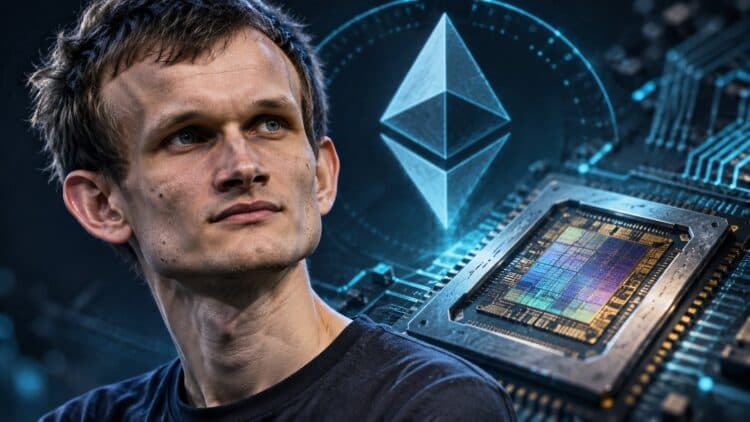
Ethereum co-founder Vitalik Buterin has introduced a provocative new security principle for cryptocurrency holders: "Not your silicon, not your keys." In a November 26 essay, the 32-year-old programmer argued that true crypto security must extend beyond open-source software to include the physical computer chips inside hardware wallets and other devices. This marks a significant evolution in how the crypto community thinks about protecting digital assets.
The Hardware Security Challenge in Cryptocurrency
Buterin's latest proposal addresses a vulnerability that even the most security-conscious crypto users may overlook: compromised hardware at the chip level. While the cryptocurrency industry has long emphasized the importance of controlling your private keys through the mantra "not your keys, not your coins," Buterin now suggests this doesn't go far enough. If the physical chips processing those keys are compromised, software-level security measures become meaningless.
The essay proposes that hardware manufacturers should publish their physical chip layouts, known as GDS (Graphic Design System) files. This would allow independent researchers and security experts to compare actual hardware against the published designs, verifying that chips function as advertised without hidden backdoors or malicious modifications.
The IRIS Inspection Technique
Buterin highlighted researcher Andrew Huang's infrared inspection technique (IRIS) as a potential solution for examining chips without physically removing them from devices. However, he acknowledged that IRIS has resolution limitations and cannot serve as a universal fix for all hardware security concerns. The technology represents progress, but falls short of providing complete verification capabilities.
Understanding Vitalik Buterin's Crypto Journey
To appreciate why Buterin focuses on such fundamental security questions, it helps to understand his background. Born in Russia in 1994 and raised in Canada, Buterin discovered Bitcoin in 2011 as a teenager. He co-founded Bitcoin Magazine, where he explored cryptocurrency technology and economics before most financial institutions took digital assets seriously.
At 19, while studying computer science at the University of Waterloo and working as a research assistant to cryptographer Ian Goldberg, Buterin conceived Ethereum. He received a $100,000 Thiel Fellowship in 2014 and left university to develop the project full-time. His vision was to create a blockchain specifically designed for programmability, overcoming Bitcoin's limitations for building sophisticated decentralized applications.
Ethereum's Revolutionary Smart Contract Platform
In November 2013, Buterin authored the initial Ethereum whitepaper proposing a blockchain with a general-purpose programming environment. Rather than requiring developers to build entirely new networks for each application, Ethereum allowed them to deploy smart contracts that automatically execute agreements without intermediaries.
Consider decentralized lending platforms that manage collateral, calculate interest, and authorize withdrawals through code rather than banks. While smart contracts can still contain bugs or depend on unreliable data, Ethereum introduced the foundational capability to execute programmable financial agreements on a shared blockchain. NexCrypto leverages similar blockchain technology to deliver AI-powered trading signals across crypto and forex markets.
Buterin's Influence and Net Worth
According to blockchain analytics firm Arkham, Buterin controls approximately $390 million in crypto assets, primarily consisting of roughly 224,000 ETH. However, his true net worth remains unconfirmed publicly. What matters more than his personal wealth is his ongoing influence over Ethereum's development direction.
It's crucial to understand that Buterin's essay is a proposal, not a claim that existing hardware wallets are already compromised. Publishing security concerns doesn't grant him unilateral power to change Ethereum's protocol. The network operates through decentralized consensus among thousands of validators and developers worldwide.
The Broader Security Philosophy
Buterin's hardware security proposal aligns with his broader push for enhanced privacy and quantum-resistant cryptography on Ethereum's roadmap. He consistently advocates for independently verifiable computing systems where users can audit and verify every layer of the technology stack.
This philosophy reflects the original cryptocurrency ethos: don't trust, verify. By extending verification requirements to physical silicon, Buterin challenges the crypto community to question assumptions about hardware manufacturers and supply chain integrity. For someone who helped build an alternative to centralized financial infrastructure, scrutinizing the manufacturers behind that infrastructure represents a logical progression.
What This Means for Crypto Investors
While Buterin's proposal may seem theoretical, it has practical implications for anyone holding cryptocurrency. Hardware wallet manufacturers may face pressure to increase transparency around their chip designs and manufacturing processes. Security-conscious users might begin prioritizing devices from companies willing to publish GDS files and submit to independent verification.
The conversation also highlights the multi-layered nature of cryptocurrency security. Protecting your investments requires attention to private key management, software vulnerabilities, network security, and now potentially hardware integrity. Staying informed about these evolving security considerations is essential for anyone serious about crypto investment.
As the cryptocurrency ecosystem matures, expect security standards to become more rigorous across every dimension. Whether you're actively trading or holding long-term positions, understanding these foundational security principles helps protect your assets. For the latest insights on crypto security and market trends, explore our blog and discover how NexCrypto's AI-powered platform can enhance your trading strategy while maintaining security best practices.
Source: NewsBTC
Ready to Trade Smarter?
Join thousands of traders using AI-powered signals, real-time analytics, and on-chain intelligence to stay ahead of the market.
Start Free — No Credit Card Needed