Vitalik Buterin Charts Ethereum's Course: Leading the Charge for AI Privacy and Decentralization
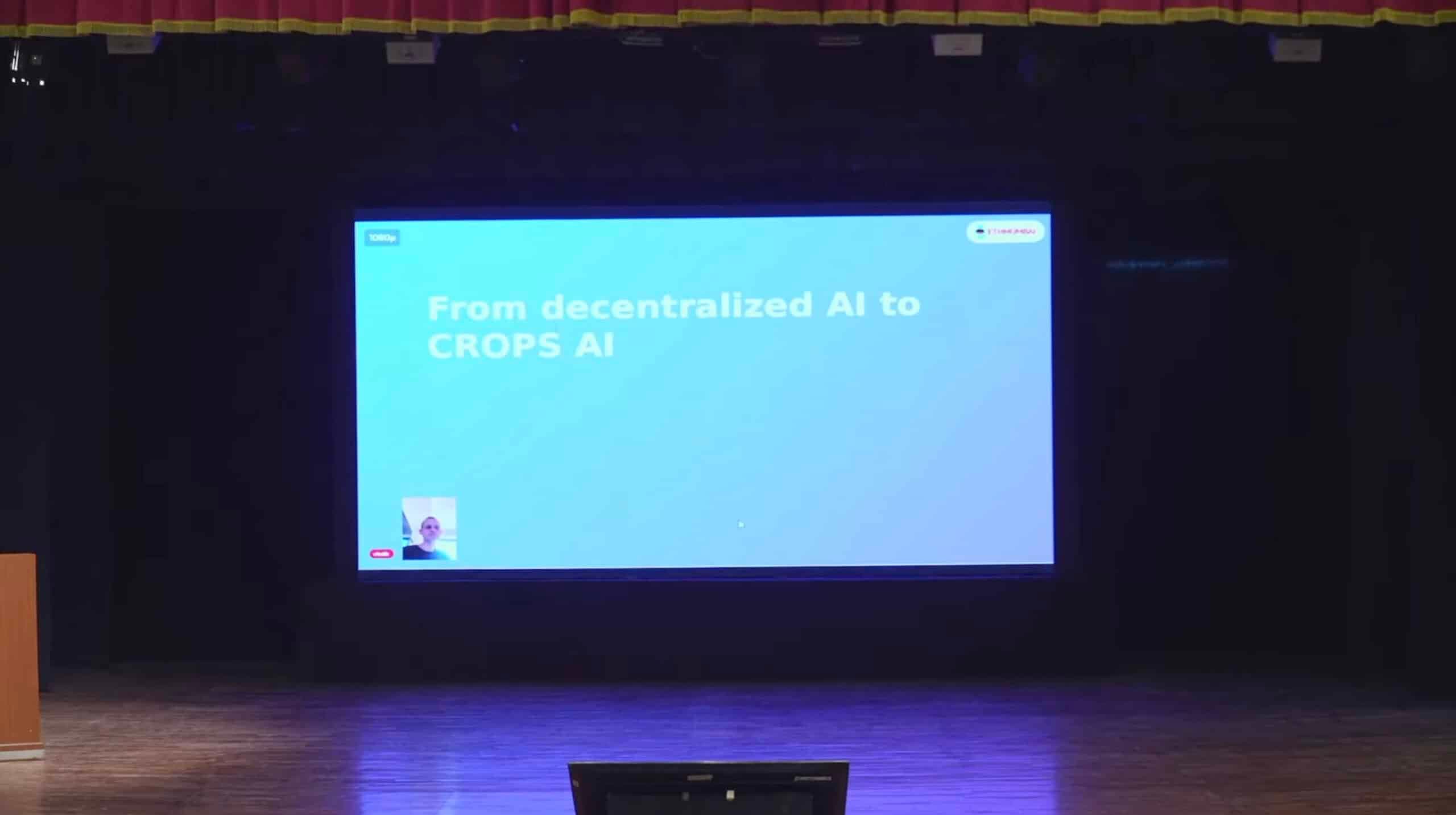
Vitalik's Vision: Ethereum at the Forefront of AI Ethics
The intersection of Artificial Intelligence and blockchain technology presents both immense opportunities and significant challenges. At the recent ETHMumbai conference, Ethereum's co-creator, Vitalik Buterin, took center stage to articulate a compelling vision for how the Ethereum ecosystem can, and indeed must, lead the charge in developing privacy-preserving and decentralized AI. His address served as a crucial reminder that as AI rapidly advances, the principles of Web3 – user sovereignty, transparency, and decentralization – are more vital than ever.
Buterin emphasized that while AI offers revolutionary potential, particularly in areas like enhancing wallet security and identifying malicious patterns, its centralized deployment poses substantial risks. The specter of powerful, opaque AI systems controlled by a few entities could undermine the very foundations of privacy and open access that blockchain strives to build. This makes Ethereum's role not just beneficial, but essential, in guiding AI development towards a more equitable and secure future.
The Dual Edge of Artificial Intelligence in Crypto
For crypto traders and enthusiasts, the promise of AI integration is tantalizing. Imagine AI algorithms capable of detecting sophisticated phishing attempts in real-time, predicting market movements with greater accuracy, or even autonomously managing portfolio rebalancing based on complex strategies. These applications could revolutionize how we interact with digital assets, making the ecosystem safer and more efficient.
- Enhanced Wallet Security: AI can analyze transaction patterns, flag unusual activity, and even help users recover access to wallets through secure, privacy-preserving authentication methods.
- Smart Contract Auditing: AI could assist in identifying vulnerabilities and bugs in smart contract code, significantly reducing risks in DeFi.
- Fraud Detection: Leveraging vast datasets, AI can become a powerful tool in combating scams and illicit activities across the blockchain network.
- Personalized Trading Insights: For our audience on a trading signals platform, AI offers the potential for highly customized market analysis and predictive models, helping to refine trading strategies.
However, Vitalik was quick to highlight the inherent dangers. Centralized AI models, trained on vast amounts of personal data, could become instruments of surveillance and control. The very data used to enhance security could also be exploited, leading to unprecedented privacy breaches and a loss of individual autonomy. This 'dual edge' necessitates a proactive approach from the Web3 community to ensure AI development aligns with decentralized values.
Championing Privacy-Preserving AI on Ethereum
Vitalik's solution is clear: Ethereum must become the foundational layer for privacy-preserving and decentralized AI. He specifically pointed to advanced cryptographic techniques as the key enablers:
- Zero-Knowledge Proofs (ZK-proofs): These allow one party to prove to another that a statement is true, without revealing any information beyond the validity of the statement itself. In the context of AI, ZK-proofs could enable AI models to verify data or computations without needing access to the raw, sensitive information. For example, an AI could verify a user's credit score without ever seeing their financial history.
- Fully Homomorphic Encryption (FHE): FHE is a groundbreaking cryptographic method that allows computations to be performed on encrypted data without decrypting it. This means an AI model could process sensitive user data while it remains encrypted throughout the entire computation, only decrypting the final, aggregated result if necessary. This technology holds immense promise for maintaining data privacy even when leveraging complex AI algorithms.
By integrating these technologies, Ethereum can foster an environment where AI's benefits are harnessed without compromising user privacy or leading to centralized data monopolies. This vision promotes a 'decentralized AI' paradigm, where AI models can be trained, verified, and utilized in a transparent, permissionless, and censorship-resistant manner, distributing power away from single entities.
Practical Implications for the Ethereum Ecosystem
For developers, investors, and users within the Ethereum ecosystem, Vitalik's call opens up a new frontier of innovation. Building privacy-preserving AI on Ethereum could lead to a wave of new decentralized applications (dApps) and protocols:
- AI-Powered DeFi: Imagine DeFi protocols that use AI for risk assessment or collateral management, all while user financial data remains private via ZK-proofs.
- Secure Digital Identity: AI could aid in verifying digital identities without exposing personal identifiers, enhancing KYC/AML processes while respecting privacy.
- Verifiable Data Marketplaces: Users could sell access to their anonymized or encrypted data for AI training, ensuring fair compensation and control over their information.
- Decentralized Autonomous Agents: AI-driven agents could perform complex tasks on-chain, with their actions and decisions verifiable through cryptographic proofs.
This strategic direction could significantly bolster Ethereum's utility and value proposition, attracting more talent and capital into the ecosystem. As the demand for ethical AI solutions grows, Ethereum, with its robust infrastructure and commitment to decentralization, stands poised to become the leading platform for this critical technological convergence.
Beyond the Hype: Building a Secure and Ethical AI Future with Web3
Vitalik Buterin's address at ETHMumbai was more than just a technical discussion; it was a philosophical statement on the future direction of technology. It underscored the urgency for the Web3 community to not just adopt AI, but to actively shape its development in alignment with core blockchain principles. The opportunity for Ethereum to establish itself as the bedrock for a privacy-first, decentralized AI is immense, offering a compelling alternative to the centralized AI models that dominate today.
For NexCrypto readers, this signals a crucial trend. Projects focusing on ZK-proofs, FHE, and decentralized AI solutions built on Ethereum could see significant long-term growth and adoption. Understanding these foundational shifts will be key to navigating the evolving landscape where blockchain and AI converge, promising a future where technological advancement and individual sovereignty can coexist.
Source: 99Bitcoins
Ready to Trade Smarter?
Join thousands of traders using AI-powered signals, real-time analytics, and on-chain intelligence to stay ahead of the market.
Start Free — No Credit Card Needed