US Sanctions Russian Crypto Brokers in North Korean Fraud
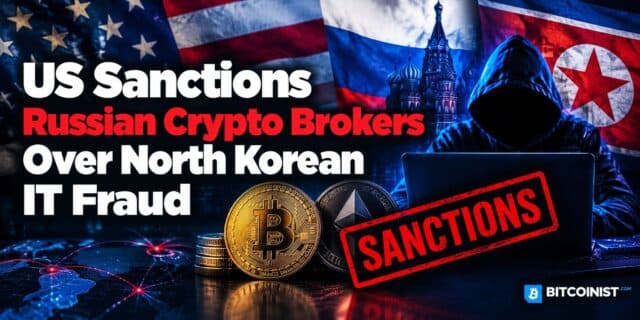
The United States Treasury Department has escalated its crackdown on cryptocurrency-based sanctions evasion, targeting a sophisticated network that converts digital assets for North Korean operatives. This latest action reveals how Russian intermediaries are facilitating millions of dollars in crypto conversions that ultimately fund Pyongyang's weapons programs through elaborate IT worker fraud schemes.
Russian Nationals Face Sanctions for Crypto Conversion
On October 28, the Treasury Department's Office of Foreign Assets Control (OFAC) announced sanctions against 10 individuals and one entity connected to North Korean IT worker fraud operations. At the center of the enforcement action are two Russian nationals, Ilya Boykov and Vitold Obertas, who allegedly served as critical financial intermediaries in converting cryptocurrency for North Korean operatives.
According to Treasury officials, Boykov exchanged and converted approximately $3.5 million in cryptocurrency for Alis, a company previously sanctioned in March 2024 due to its connections with North Korean IT workers. Meanwhile, Obertas allegedly processed nearly $2 million in crypto conversions and facilitated at least $1.25 million in additional currency transactions for North Korean officials since January 2025.
The sanctions package also designated eight cryptocurrency addresses on the Ethereum and Tron blockchains that are tied to the sanctioned individuals, demonstrating the Treasury's increasingly sophisticated approach to tracking digital asset flows.
How North Korean IT Worker Fraud Schemes Operate
The mechanics of these fraudulent operations reveal a disturbing level of sophistication. North Korean operatives employ stolen identities, forged documents, and fabricated personas to secure remote positions at legitimate technology companies worldwide. Once embedded in these organizations, the regime captures the majority of their wages, effectively transforming ordinary software development work into state revenue streams.
Advanced Technology Enables Deception
Blockchain analytics firm Chainalysis reports that these operatives have increasingly turned to generative artificial intelligence to enhance their deception capabilities. AI tools are now being used to:
- Generate professional resumes and cover letters that pass initial screening
- Prepare for technical interviews with realistic responses
- Create AI-generated profile photos that appear authentic
- Deploy deepfake video technology during hiring video calls to conceal true identities
This technological sophistication makes detection increasingly challenging for companies conducting remote hiring, particularly in the competitive technology sector where rapid recruitment is common.
Security Risks Beyond Fraudulent Employment
The threat extends far beyond simply paying a disguised employee. Treasury officials warn that these workers have exploited their corporate network access to plant malware and steal sensitive proprietary data. This dual-purpose approach transforms what appears to be a financial fraud into a potential national security threat, as North Korean operatives gain access to intellectual property and internal systems of legitimate businesses.
Russian Infrastructure Supporting North Korean Operations
The investigation revealed connections between sanctioned individuals and Garantex, a Russian cryptocurrency exchange that has itself faced sanctions. Chainalysis successfully traced cryptocurrency earned by a North Korean IT worker through Boykov, who then transferred the funds to Garantex for conversion into fiat currency.
OFAC also designated the First Financial and Technical Development Center, identified as a North Korean-controlled organization operating within Russia. According to Treasury findings, six workers sanctioned alongside this entity generated over $750,000 for the organization since 2025, highlighting the scale of these revenue-generation operations.
Escalating US Enforcement Against Crypto-Based Sanctions Evasion
This October action follows a significant March 2025 sanctions round in which the Treasury targeted six individuals and two companies accused of laundering $800 million in cryptocurrency for North Korea. The progression of these enforcement actions demonstrates a strategic shift in US policy.
Rather than focusing exclusively on the North Korean workers themselves, US authorities are increasingly targeting the financial intermediaries and infrastructure that enable these schemes. By disrupting the conversion networks that transform cryptocurrency into usable currency, regulators aim to cut off the revenue streams that fund North Korea's weapons programs at their most vulnerable point.
For cryptocurrency traders and businesses, these developments underscore the importance of robust compliance measures and due diligence. Platforms like NexCrypto prioritize security and regulatory compliance, ensuring that trading activities remain legitimate and protected from involvement in sanctioned operations.
Implications for the Crypto Industry
The increasing use of blockchain analytics and targeted sanctions against specific cryptocurrency addresses signals a maturing enforcement landscape. Companies operating in the digital asset space must implement comprehensive know-your-customer (KYC) and anti-money laundering (AML) procedures to avoid inadvertent involvement in sanctions evasion schemes.
For remote employers in the technology sector, the rise of AI-enhanced identity fraud necessitates enhanced verification procedures beyond traditional background checks. Video interviews, identity verification services, and monitoring for suspicious behavior patterns have become essential components of secure hiring practices.
The convergence of cryptocurrency, artificial intelligence, and international sanctions evasion represents a new frontier in financial crime that requires coordinated responses from governments, technology companies, and the cryptocurrency industry. As enforcement actions continue to evolve, staying informed about regulatory developments and maintaining strict compliance standards becomes increasingly critical.
To stay updated on the latest developments in cryptocurrency regulation and security, follow our blog for expert analysis and insights that help you navigate the evolving digital asset landscape safely and profitably.
Source: Bitcoinist
Ready to Trade Smarter?
Join thousands of traders using AI-powered signals, real-time analytics, and on-chain intelligence to stay ahead of the market.
Start Free — No Credit Card Needed