Trade Tensions: How US-Canada Spat Impacts Crypto
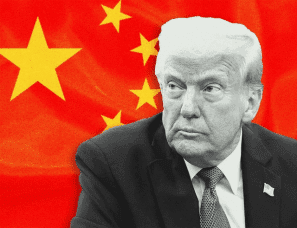
In the intricate dance of global finance, geopolitical developments often serve as unexpected choreographers, dictating the rhythm and direction of markets. Recent rhetoric surrounding US-Canada trade relations, marked by sharp criticisms and threats to existing deals, underscores how political friction between major economic partners can send ripples of uncertainty across the investment landscape. For traders in both traditional forex and the burgeoning crypto markets, such events are not mere headlines but crucial indicators that demand careful analysis and strategic adaptation.
Geopolitical Friction and Market Volatility
The relationship between national politics and financial markets is undeniably symbiotic. When high-ranking officials from economically intertwined nations engage in heated exchanges or threaten established trade agreements, the immediate market reaction is often one of apprehension. Investors, seeking stability, may re-evaluate asset allocations, leading to increased volatility. This isn't just about direct economic impact; it's about the erosion of confidence and the perceived risk of future disruptions. Historically, even verbal spats between major economies have preceded significant shifts in currency valuations, commodity prices, and equity markets, proving that sentiment can be a powerful market mover.
For the crypto market, which often marches to its own beat, geopolitical friction can have a dual effect. Sometimes, digital assets like Bitcoin are seen as a safe haven, an alternative to traditional financial systems vulnerable to political instability. At other times, crypto's inherent volatility means it can amplify broader market anxieties, experiencing significant price swings in response to macro news. Understanding these nuanced reactions is key for traders looking to capitalize on or mitigate risks from such global events.
The Stakes of US-Canada Trade Relations
The economic ties between the United States and Canada are among the strongest in the world, built upon decades of integrated supply chains and shared resources. Agreements like the USMCA (United States-Mexico-Canada Agreement) facilitate billions of dollars in trade annually across diverse sectors including energy, automotive, agriculture, and technology. Any threat to these foundational trade deals, whether rhetorical or substantive, carries immense weight. Disruptions could lead to tariffs, increased operational costs for businesses, supply chain bottlenecks, and ultimately, higher prices for consumers on both sides of the border. Such instability could reverberate globally, given the sheer volume of trade involved.
Impact on Traditional Forex Markets
In the traditional forex arena, the Canadian Dollar (CAD) and the US Dollar (USD) would be at the forefront of any trade dispute. Threats of trade deal terminations could significantly weaken the CAD against the USD, as investors anticipate reduced exports and economic slowdown in Canada. Conversely, the USD might see an initial strengthening as a safe-haven currency, though prolonged global trade wars could eventually undermine its stability too. Traders closely monitor economic indicators, political statements, and central bank reactions to position themselves in currency pairs like CAD/USD, which becomes particularly sensitive during periods of geopolitical tension.
Ripple Effects on Global Supply Chains
Beyond direct currency movements, a breakdown in US-Canada trade could trigger a domino effect across global supply chains. Many international corporations have integrated operations spanning both countries, meaning any impediment to cross-border movement of goods and services would impact their profitability and efficiency. This could lead to a reassessment of global manufacturing strategies, potential inflationary pressures as companies seek alternative (and often more expensive) sourcing, and a general cooling of international investment sentiment. The interconnectedness of modern economies means a spat between two major players rarely stays isolated.
Crypto's Resilience Amidst Economic Shifts
The narrative surrounding crypto as a hedge against traditional economic instability often resurfaces during times of geopolitical tension. Bitcoin, in particular, has sometimes demonstrated a low correlation with traditional assets, making it an attractive option for diversification. Its decentralized nature theoretically shields it from the direct influence of any single government's policies or trade disputes. However, this resilience is not absolute. The crypto market is still highly speculative and can be influenced by broader market sentiment, liquidity crises, or regulatory uncertainties that might arise from global economic shifts.
While some investors might flock to crypto for perceived safety, others might liquidate their digital assets to cover losses in traditional markets, leading to increased selling pressure. The key for traders is to understand these complex dynamics and avoid making assumptions. Observing how different cryptocurrencies react to specific types of economic news – whether they act as safe havens, risk-on assets, or simply follow the broader market trend – is crucial for informed decision-making.
Navigating Uncertainty with AI Trading Signals
In an environment where geopolitical events can rapidly reshape market conditions, relying solely on traditional analysis methods might not be sufficient. This is where advanced tools like AI-powered trading signals become invaluable. Artificial intelligence can process vast amounts of data—from news sentiment and social media trends to macroeconomic indicators and historical price movements—at speeds and scales impossible for humans. This allows AI algorithms to identify subtle patterns, predict potential market shifts, and generate timely trading signals with greater accuracy.
For traders facing the volatility spurred by US-Canada trade tensions or any other global event, AI can help in several ways: it can highlight emerging opportunities, provide risk management insights, and suggest optimal entry and exit points. By leveraging sophisticated algorithms, traders can make more informed decisions, adapt quickly to changing market dynamics, and potentially enhance their trading outcomes. Explore how AI can empower your trading strategy by visiting NexCrypto.
Geopolitical tensions, like the recent rhetoric surrounding US-Canada trade, are a constant factor in the global financial landscape. While they introduce uncertainty and volatility, they also present unique opportunities for informed traders. Staying abreast of global developments and employing advanced analytical tools are paramount. At NexCrypto, our AI-powered platform provides the insights and signals you need to navigate these complex markets confidently. Don't let market uncertainty catch you off guard; empower your trading journey today with our blog and cutting-edge technology.
Source: Crypto Briefing
Ready to Trade Smarter?
Join thousands of traders using AI-powered signals, real-time analytics, and on-chain intelligence to stay ahead of the market.
Start Free — No Credit Card Needed