Tether Disputes S&P Rating as USDT Reserve Concerns Grow
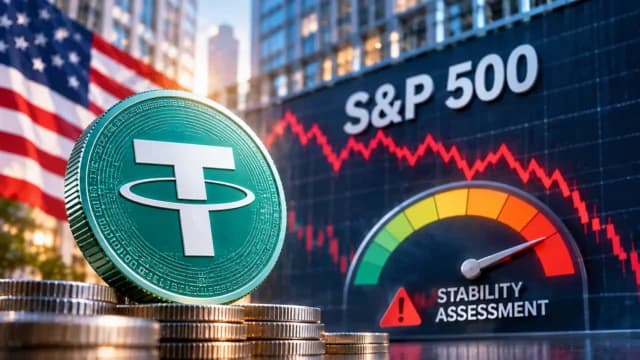
Tether has publicly contested S&P Global Ratings' decision to maintain the lowest possible stability assessment for its USDT stablecoin, marking an escalation in the ongoing debate over reserve transparency and risk management in the cryptocurrency industry. The dispute highlights fundamental disagreements about how stablecoins should be evaluated and what constitutes adequate backing for digital assets pegged to the US dollar.
S&P Maintains Lowest Stability Score for USDT
In its November 18 assessment, S&P Global Ratings kept USDT's ability to maintain its dollar peg at level 5, classified as "weak" on the agency's five-point scale. This represents the lowest possible rating and remains unchanged from the initial downgrade issued in November 2025. The rating agency's primary concerns revolve around the composition of Tether's reserve assets and the regulatory framework governing the stablecoin issuer.
According to S&P's analysis, Tether's reserves have shifted toward higher-risk holdings over the past year. As of September 30, approximately 28% of USDT in circulation was backed by assets including Bitcoin, gold, public equities, secured loans, and corporate bonds. This marks an increase from 24% the previous year, signaling what the rating agency views as growing exposure to volatile market conditions.
Understanding Tether's Reserve Composition and Risk Profile
The core of S&P's concern lies in the potential for simultaneous value declines across multiple asset classes. If Bitcoin prices fell sharply while corporate bonds defaulted and equity markets declined, Tether could theoretically face an undercollateralization scenario. The rating agency emphasized that such correlated losses could compromise USDT's ability to maintain its 1:1 peg with the US dollar.
Tether's most recent reserve report, attested by accounting firm BDO, showed approximately $191.5 billion in assets against $183.5 billion in liabilities as of September 30. This provides roughly $7.95 billion in excess assets, representing a cushion of about 4.3% above the stablecoin's circulating supply. While this demonstrates overcollateralization, S&P questions whether this buffer is sufficient given the risk profile of the underlying assets.
Regulatory Framework Under Scrutiny
Tether's relocation to El Salvador in January 2025 has added another dimension to the regulatory debate. The country's National Commission of Digital Assets requires that 70% of reserves be held in assets liquidatable within 30 days. However, S&P describes this framework as broad, noting that it permits holdings like Bitcoin and gold despite their price volatility and potentially limited liquidity during market stress.
The rating agency also highlighted the absence of mandatory asset segregation requirements in El Salvador's regulatory framework. In contrast, regulators in the United States and European Union typically mandate strict separation between reserve assets and an issuer's operational holdings. This segregation protects stablecoin users from exposure to the issuer's broader business risks, including potential bankruptcy or operational failures.
Transparency and Audit Disclosure Gaps
A significant point of contention involves Tether's audit practices and disclosure levels. In August 2026, KPMG issued an unqualified opinion on Tether's 2025 financial statements, which the company promoted as its first comprehensive independent audit. However, S&P noted that neither the complete audited financial statements nor the full auditor's report have been made publicly available, limiting independent verification of the findings.
Comparison with Industry Standards
S&P's assessment also points to differences between Tether's disclosure practices and those of competing stablecoin issuers. Tether publishes quarterly attestations of its reserves, while some competitors provide monthly updates. Additionally, Tether's reports do not identify specific custodians or counterparties holding reserve assets, making it difficult for external observers to assess concentration risk or counterparty exposure.
For traders and investors seeking reliable information about cryptocurrency markets, platforms like NexCrypto provide AI-powered analysis of market movements and their underlying drivers, including stablecoin dynamics that can impact overall market liquidity.
Tether's Response and Industry Implications
Tether has vigorously defended its reserve management practices, arguing that S&P's evaluation framework is fundamentally flawed. CEO Paolo Ardoino referenced the 2008 financial crisis and rating agencies' failure to identify risks in mortgage-backed securities, suggesting that traditional financial risk assessment models may not appropriately evaluate cryptocurrency-related assets. The company has indicated it views S&P's criticism as a badge of honor rather than a cause for concern.
Despite the rating controversy, USDT has maintained its dollar peg with remarkable consistency throughout various market cycles. The stablecoin continues to command the largest market share in its category and serves as a crucial liquidity provider across cryptocurrency exchanges worldwide. This operational track record stands in contrast to S&P's theoretical risk assessment, raising questions about the practical relevance of traditional rating methodologies for digital assets.
The ongoing dispute between Tether and S&P Global Ratings reflects broader tensions in the cryptocurrency industry regarding appropriate regulatory standards, transparency requirements, and risk assessment frameworks. As stablecoins play an increasingly central role in digital asset markets, these debates will likely intensify, potentially shaping future regulatory approaches in major jurisdictions. For the latest insights on how these developments affect trading strategies and market dynamics, visit our blog for expert analysis and AI-driven market intelligence.
Source: Bitcoinist
Ready to Trade Smarter?
Join thousands of traders using AI-powered signals, real-time analytics, and on-chain intelligence to stay ahead of the market.
Start Free — No Credit Card Needed