SharpLink's Ethereum Treasury: A $735M 'Paper' Loss and the Peril of Unhedged Crypto Strategies
The Allure and Peril of Corporate Crypto Treasuries
In the rapidly evolving landscape of digital finance, corporations are increasingly exploring the integration of cryptocurrencies into their treasury management strategies. The promise of inflation hedging, diversification, and potentially explosive growth has drawn many, yet the inherent volatility of the crypto market presents significant risks. The recent experience of SharpLink Gaming (SBET) with its Ethereum (ETH) holdings offers a compelling, albeit cautionary, tale for both institutional players and individual traders navigating this complex terrain.
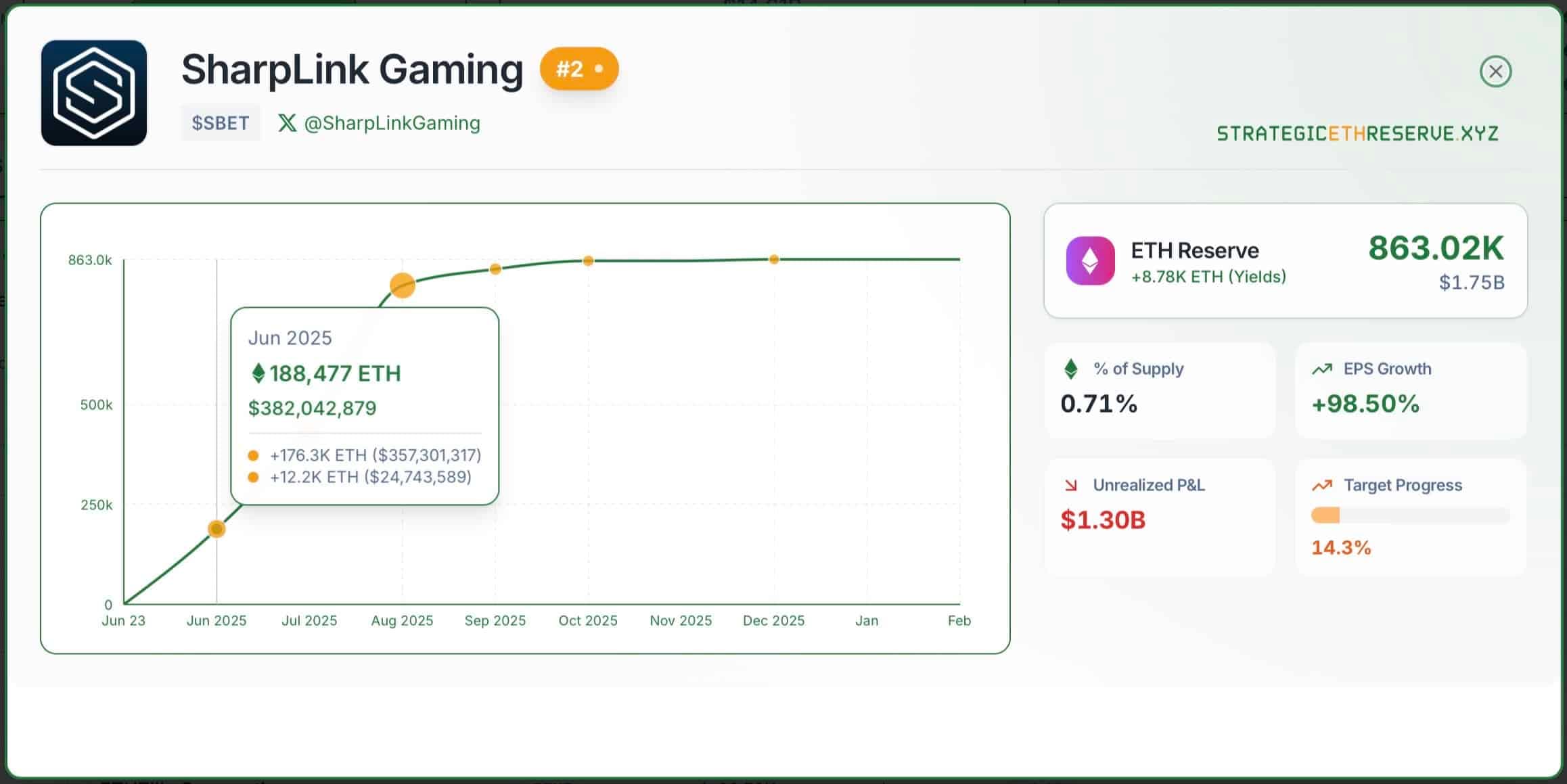
Reports of SharpLink facing an estimated $735 million in 'paper' losses on its ETH treasury have sent ripples through the crypto community. While these are unrealized losses—meaning the assets haven't been sold—they underscore the profound challenges and strategic considerations involved when a company places a substantial portion of its balance sheet into highly volatile digital assets.
SharpLink's Ethereum Bet: A Deep Dive into the 'Paper' Loss
SharpLink Gaming, a sports betting and iGaming technology company, made headlines not for its core business, but for its substantial investment in Ethereum. At its peak, the company's ETH holdings were valued significantly higher, reflecting the bull run that characterized parts of 2021 and early 2022. However, the subsequent market downturn, particularly the sharp decline in ETH's value, led to a dramatic depreciation of these assets on paper.
It's crucial to differentiate between 'paper loss' and 'realized loss.' A paper loss, or unrealized loss, occurs when the market value of an asset falls below its purchase price, but the asset has not yet been sold. The loss only becomes realized if the company liquidates its position. For SharpLink, this means that while their balance sheet reflects a significant reduction in the value of their ETH, they haven't necessarily incurred a cash outflow unless they were forced to sell.
The Strategic Rationale Behind Corporate Crypto Holdings
Why do companies like SharpLink opt to hold volatile assets like Ethereum in their treasuries? Several factors often drive such decisions:
- Inflation Hedge: Some view Bitcoin and Ethereum as potential hedges against fiat currency inflation, believing their decentralized and finite nature makes them superior stores of value.
- Diversification: Adding uncorrelated assets to a traditional portfolio can, in theory, reduce overall risk and enhance returns.
- Strategic Alignment: For tech-forward companies, holding crypto can signal innovation and alignment with future technological trends, particularly in the Web3 space.
- Potential for High Returns: The historical performance of cryptocurrencies has shown periods of exponential growth, enticing companies seeking higher yields than traditional investments.
The Double-Edged Sword: Volatility and Risk Management
SharpLink's situation is a potent reminder of crypto's inherent volatility. While this volatility can lead to rapid gains, it can just as quickly erase significant value. For a publicly traded company, such swings can impact investor confidence, share price, and overall financial stability.
Key Considerations for Corporate Crypto Strategies:
- Clear Investment Thesis: What is the primary goal of holding crypto? Is it short-term speculation, long-term store of value, or operational utility?
- Allocation Limits: What percentage of the treasury is prudent to allocate to high-volatility assets? Over-concentration in a single asset like ETH can be disastrous.
- Risk Mitigation: Were hedging strategies employed? Options, futures, or even stablecoin allocations could help mitigate downside risk.
- Liquidity Management: Can the company withstand prolonged periods of unrealized losses without impacting operational liquidity?
- Transparency and Reporting: How are these digital assets accounted for and reported to shareholders and regulators?
The absence of clear risk management frameworks or an over-reliance on a single asset's upward trajectory can expose a company to immense financial pressure when market conditions turn sour.
Lessons for Traders and Institutional Investors
The SharpLink case provides invaluable lessons for anyone involved in the crypto markets, from retail traders leveraging signals to large institutional investors:
- Diversification is Key: While SharpLink focused heavily on ETH, a more diversified portfolio across different crypto assets or even stablecoins could have softened the blow.
- Understand the 'Paper' vs. 'Realized' Distinction: For traders, this translates to knowing when to cut losses or take profits. Unrealized losses can turn into realized ones if panic selling occurs.
- Implement Robust Risk Management: Stop-loss orders, take-profit levels, and dynamic position sizing are crucial. For corporations, this extends to hedging strategies and clear treasury policies.
- Market Cycles are Inevitable: Bull markets don't last forever. A sound strategy accounts for both uptrends and downturns, including provisions for bear markets.
- Due Diligence on Corporate Strategies: When evaluating companies that hold significant crypto, scrutinize their treasury management policies, not just their core business.
The Broader Impact on Ethereum and Institutional Adoption
While SharpLink's situation is specific to one company, it contributes to the broader narrative around institutional crypto adoption. Such significant losses, even if unrealized, can lead to increased scrutiny from regulators and a more cautious approach from other corporations considering similar strategies.
For Ethereum, incidents like this highlight its inherent volatility, which can be a double-edged sword for its perception as a foundational asset. However, it doesn't diminish ETH's technological value or its role in the DeFi and NFT ecosystems. Instead, it emphasizes that even blue-chip cryptocurrencies require sophisticated risk management when integrated into traditional financial structures.
Conclusion: Navigating the Crypto Frontier with Prudence
SharpLink Gaming's journey with its Ethereum treasury serves as a powerful case study on the opportunities and formidable risks associated with corporate crypto adoption. The $735 million 'paper' loss, while not yet realized, underscores the necessity for meticulous planning, robust risk management, and a clear understanding of market dynamics before committing significant capital to volatile digital assets.
For traders and institutions alike, the message is clear: the crypto market offers unparalleled potential, but it demands an equally unparalleled level of prudence, strategic foresight, and disciplined risk management to navigate its turbulent waters successfully. The future of corporate crypto treasuries will likely involve more sophisticated hedging, greater diversification, and a more conservative approach to allocation, learning from the experiences of pioneers like SharpLink.
Source: 99Bitcoins
Ready to Trade Smarter?
Join thousands of traders using AI-powered signals, real-time analytics, and on-chain intelligence to stay ahead of the market.
Start Free — No Credit Card Needed