SEC Staff Signals Major Shift: Most Crypto Assets May Not Be Securities Under Federal Law
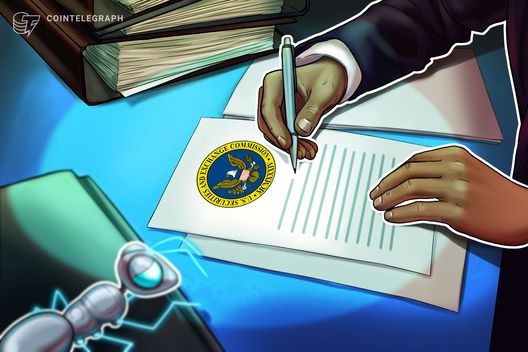
A Landmark Shift in Regulatory Perspective for Digital Assets
For years, the looming question of whether cryptocurrencies fall under the stringent definition of securities has cast a long shadow over the digital asset market. This uncertainty has stifled innovation, complicated fundraising, and presented significant compliance hurdles for projects operating within the United States. However, a recent pronouncement from the U.S. Securities and Exchange Commission's (SEC) Division of Corporation Finance offers a glimmer of clarity, suggesting a more nuanced approach: most crypto assets may not, in fact, be deemed securities under federal law.
This isn't a full SEC commission ruling, but rather a crucial piece of guidance from the staff responsible for corporate finance. It represents a potential shift in the regulatory landscape, indicating a willingness to distinguish between initial fundraising efforts (often security offerings) and the subsequent trading of tokens on mature, decentralized networks. For traders and investors, understanding this distinction is paramount, as it could influence market sentiment, project viability, and ultimately, investment opportunities.
Deconstructing the "No-Action Letter" Framework
At the heart of this new guidance is a framework centered around the concept of "no-action letters." Essentially, projects can now seek a formal letter from the SEC staff stating that, based on the information provided, the staff would not recommend enforcement action if the project proceeds without registering its digital asset as a security. This process provides a bespoke avenue for regulatory certainty, moving beyond broad generalizations to evaluate specific token characteristics and network structures.
The core of the inquiry revolves around whether a digital asset continues to meet the criteria of an "investment contract" as defined by the landmark Howey Test. The Howey Test, established by the Supreme Court in 1946, defines an investment contract as an investment of money in a common enterprise with a reasonable expectation of profits to be derived from the entrepreneurial or managerial efforts of others. The SEC staff's guidance suggests that as a network matures and becomes sufficiently decentralized, the "efforts of others" component of the Howey Test may no longer apply, thus removing the asset from security classification.
The Howey Test and the Evolution Towards Decentralization
The concept of "sufficient decentralization" is the linchpin of this new interpretation. While an initial token sale might indeed qualify as an investment contract because investors are relying on a central team's efforts to build and grow the network, this dynamic can change. As a network evolves, key characteristics that point towards decentralization include:
- Widespread Distribution: A broad base of token holders, reducing the concentration of control.
- Developer Autonomy: The absence of a single, identifiable group or person whose ongoing efforts are central to the network's success.
- Functional Utility: The token having a clear utility within a fully operational network, rather than merely being a speculative investment.
- Community Governance: Decisions about the network's future being made by a dispersed community through transparent governance mechanisms.
When these conditions are met, the argument is that investors are no longer primarily relying on the managerial efforts of a centralized entity for their profits. Instead, the value is derived from the network's inherent utility, the collective efforts of its diverse participants, and broader market forces.
Implications for the Crypto Ecosystem and Trading Signals
This guidance carries profound implications for various stakeholders within the crypto space, especially for those involved in trading and investment decisions.
For Developers and Projects: A Clearer Path to Innovation
For blockchain projects and developers, this framework offers a much-needed roadmap. It incentivizes genuine decentralization, providing a potential pathway to operate in the U.S. without the onerous registration requirements of traditional securities. This could unlock significant innovation, encouraging projects to build robust, community-driven networks that are less susceptible to single points of failure, both technologically and legally. It also opens the door for projects to engage with a broader investor base that might have previously shied away due to regulatory ambiguity.
For Investors and Traders: Navigating Regulatory Risk
For NexCrypto's audience – traders and investors – this development introduces a new layer of analysis. While it doesn't instantly declassify all tokens, it signals a reduced regulatory risk for assets that can demonstrate sufficient decentralization. This could lead to:
- Enhanced Market Sentiment: A clearer regulatory environment typically fosters greater institutional and retail investor confidence.
- Due Diligence Focus: Investors will need to pay closer attention to a project's decentralization efforts, governance model, and utility, as these factors directly impact its potential security classification.
- Potential for New Listings: Exchanges might feel more comfortable listing certain assets if they have received positive guidance from the SEC staff.
Understanding which assets are actively pursuing or have achieved "sufficient decentralization" will become a critical factor in evaluating long-term viability and potential price action.
Navigating Remaining Uncertainties
Despite the positive implications, it's crucial to acknowledge the remaining uncertainties. This guidance is from the Division of Corporation Finance staff, not a formal rule from the full SEC commission. While influential, it's not legally binding in the same way a commission rule or court precedent would be. Furthermore, the definition of "sufficiently decentralized" remains somewhat subjective and will likely be tested and refined over time.
Initial token offerings, particularly those that resemble traditional fundraising rounds, are still highly likely to be considered securities. The guidance primarily addresses the status of tokens once a network has matured. Projects will still require expert legal counsel to navigate this complex landscape and effectively make their case to the SEC staff.
NexCrypto's Take: Towards a Clearer Horizon?
At NexCrypto, we view this SEC staff guidance as a cautiously optimistic step forward. It signifies a growing understanding within regulatory bodies of the unique characteristics of blockchain technology and digital assets. While the path to comprehensive and clear regulation for the entire crypto space is still long, this framework provides a tangible mechanism for certain projects to achieve a degree of regulatory certainty.
For our community, this means an evolving market where regulatory compliance becomes an increasingly important factor in asset valuation. We will continue to monitor these developments closely, providing insights and analysis to help you navigate the opportunities and risks presented by this dynamic regulatory landscape. Staying informed about a project's decentralization efforts and its engagement with regulatory bodies will be key to making informed trading decisions in the years to come.
Source: CoinTelegraph
Ready to Trade Smarter?
Join thousands of traders using AI-powered signals, real-time analytics, and on-chain intelligence to stay ahead of the market.
Start Free — No Credit Card Needed