Former SEC Commissioner Paul Atkins Advocates for Crypto 'Safe Harbor' Exemptions: A Path to Regulatory Clarity?
Navigating the Regulatory Labyrinth: A Call for Crypto 'Safe Harbors'
The cryptocurrency market, a dynamic and rapidly evolving financial frontier, has long grappled with the specter of regulatory uncertainty. At the heart of this challenge lies the ongoing debate over whether digital assets should be classified as securities, commodities, or something entirely new. This ambiguity has stifled innovation, driven projects offshore, and left investors and developers alike in a state of perpetual apprehension.
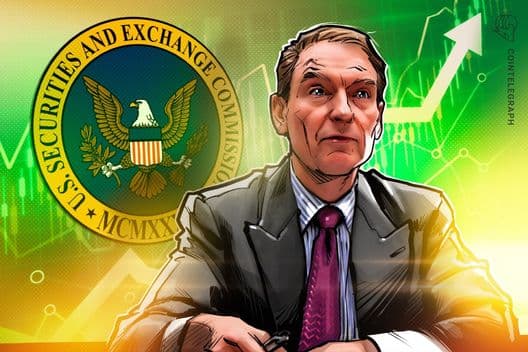
Amidst this backdrop, a significant voice has emerged from within the regulatory establishment, advocating for a pragmatic solution: Paul Atkins, a former Commissioner of the U.S. Securities and Exchange Commission (SEC). Atkins has recently floated the concept of a 'safe harbor' exemption for certain crypto projects, a proposal that could fundamentally reshape the regulatory landscape for digital assets.
What is a Crypto 'Safe Harbor' and Why Does it Matter?
At its core, a 'safe harbor' in the context of crypto regulation would provide a temporary reprieve for qualifying blockchain projects from certain stringent securities laws. The idea is to grant nascent projects a grace period to develop, decentralize, and mature without immediately facing the full weight of SEC enforcement actions, which often come with significant legal and financial burdens.
Atkins' proposal envisions a framework where projects could operate under specific conditions for a defined period, typically three years. During this time, they would be exempt from certain registration requirements, provided they meet specific criteria aimed at investor protection and transparency. The ultimate goal is for these projects to eventually transition to full compliance or demonstrate sufficient decentralization to no longer be considered securities.
The Current Regulatory Quagmire: Innovation vs. Enforcement
The SEC, under its current leadership, has largely adopted a 'regulation by enforcement' approach, asserting jurisdiction over many digital assets by classifying them as unregistered securities. This stance, while intended to protect investors, has been widely criticized for creating an environment of fear, uncertainty, and doubt (FUD) within the crypto industry. Projects are often left guessing whether their token will be deemed a security, leading to cautious development, stalled innovation, and even relocation to more crypto-friendly jurisdictions.
The infamous 'Howey Test,' a legal precedent from 1946 designed for orange groves, remains the primary tool for assessing whether a digital asset constitutes an 'investment contract.' Critics argue that this outdated framework is ill-suited for the complexities and technological nuances of blockchain technology, leading to inconsistent application and a lack of clear guidance.
Atkins' Vision: A Bridge for Innovation
Paul Atkins' advocacy for a safe harbor is rooted in the belief that the current regulatory approach is counterproductive to American innovation. He argues that fostering a clear, albeit temporary, pathway for projects to experiment and grow domestically is crucial for the U.S. to maintain its competitive edge in the global blockchain space.
His proposal aims to strike a delicate balance:
- Fostering Innovation: By reducing immediate regulatory pressure, projects can focus resources on development and decentralization.
- Investor Protection: The safe harbor would likely come with disclosure requirements, ensuring investors have access to crucial information even during the exemption period.
- Regulatory Clarity: Providing defined criteria for exemption would offer much-needed certainty to developers and investors alike.
- Path to Compliance: Projects would be incentivized to work towards full decentralization or compliance, knowing there's a clear roadmap.
Potential Benefits for the Crypto Ecosystem and Traders
For NexCrypto's audience of traders and investors, the implications of a 'safe harbor' could be profound:
- Reduced Market Volatility: Less regulatory uncertainty could lead to more stable market conditions and reduce FUD-driven price swings.
- Increased Project Viability: Projects with a clear regulatory pathway are more likely to attract talent, funding, and user adoption, potentially leading to stronger long-term investment opportunities.
- Enhanced Transparency: Disclosure requirements within the safe harbor framework could provide traders with better information to make informed decisions.
- Institutional Adoption: Regulatory clarity is a significant barrier for institutional investors. A safe harbor could pave the way for greater institutional participation, bringing more liquidity and stability to the market.
- Domestic Innovation Boom: Keeping promising projects within the U.S. could lead to a stronger domestic crypto industry, benefiting the broader economy and creating new investment avenues.
Challenges and the Road Ahead
While the 'safe harbor' concept holds immense promise, its implementation would face significant challenges. Defining the precise criteria for eligibility, monitoring compliance during the exemption period, and ensuring robust investor protection mechanisms would be critical. Furthermore, gaining consensus among SEC commissioners and other regulatory bodies would be a formidable task.
Paul Atkins' proposal is a significant step in the ongoing dialogue about sensible crypto regulation. It represents a potential shift from a purely enforcement-centric approach to one that actively seeks to foster responsible innovation. As the crypto market continues to mature, finding this balance between investor protection and technological advancement will be paramount for its sustained growth and mainstream adoption.
For traders and investors, closely monitoring these regulatory developments is essential. A shift towards clearer frameworks like a 'safe harbor' could significantly impact market sentiment, project valuations, and the overall trajectory of the digital asset space.
Source: CoinTelegraph
Ready to Trade Smarter?
Join thousands of traders using AI-powered signals, real-time analytics, and on-chain intelligence to stay ahead of the market.
Start Free — No Credit Card Needed