Crypto Mom's Call for Clarity: Reshaping Disclosure and Navigating Tokenization's Future
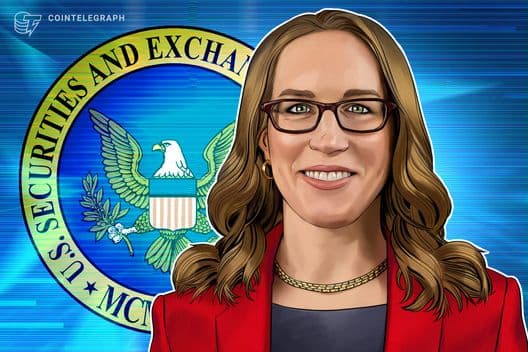
The 'Crypto Mom' Speaks: A Push for Pragmatic Regulation
In the often-turbulent world of cryptocurrency, regulatory clarity remains a highly sought-after commodity. Amidst ongoing debates and enforcement actions, one voice consistently champions a more nuanced approach: U.S. Securities and Exchange Commission (SEC) Commissioner Hester Peirce. Known affectionately as 'Crypto Mom' for her supportive stance on digital innovation, Peirce has once again stepped forward, advocating for streamlined disclosure rules specifically designed for crypto assets and highlighting the pivotal, yet complex, future of tokenization.
Her recent statements underscore a growing sentiment within parts of the regulatory landscape that traditional frameworks are ill-suited for the unique characteristics of blockchain technology and decentralized finance (DeFi). For traders and investors navigating this dynamic market, Peirce's perspective offers a glimmer of hope for a more predictable and innovation-friendly environment, potentially reducing the regulatory overhang that often contributes to market volatility.
Simplifying Disclosure: A Tailored Approach for Digital Assets
Commissioner Peirce’s core argument revolves around the need for disclosure rules that are fit-for-purpose, rather than shoehorning novel digital assets into legacy securities laws designed for conventional equities. She suggests that current disclosure requirements, which often demand extensive information about a company's financials and operations, can be overly burdensome and even irrelevant for many decentralized crypto projects.
Consider a truly decentralized protocol governed by a DAO; applying traditional corporate disclosure mandates can be a square peg in a round hole. Peirce advocates for a framework that focuses on the information truly material to crypto investors – aspects like protocol mechanics, token economics, governance structures, and key risks unique to the blockchain space. Such a shift could:
- Reduce Compliance Costs: Lowering the barrier for legitimate projects to launch and operate in the U.S.
- Foster Innovation: Encouraging developers to build without fear of inadvertently violating outdated securities laws.
- Enhance Investor Understanding: Providing relevant, digestible information tailored to the asset class, rather than overwhelming data.
- Improve Market Efficiency: By reducing regulatory uncertainty, capital allocation could become more efficient.
For traders, clearer and more relevant disclosures mean better-informed decisions. It provides a foundational layer of transparency that can help differentiate robust projects from speculative ventures, potentially leading to a more mature and stable market.
Tokenization: The Next Frontier and Its Regulatory Riddle
Beyond disclosure, Peirce also brought the critical debate around tokenization into sharp focus. Tokenization, the process of representing real-world assets (RWAs) like real estate, art, commodities, or even company shares as digital tokens on a blockchain, is widely considered one of the most transformative applications of blockchain technology.
The benefits are profound: increased liquidity for illiquid assets, fractional ownership, enhanced transparency, faster settlement, and reduced intermediaries. However, the regulatory implications are equally complex. When an asset is tokenized, does it automatically become a security? What are the jurisdictional challenges when these tokens trade globally? How do existing property laws intersect with blockchain ownership?
Key Questions Arising from Tokenization:
- Security Classification: Does tokenizing an asset inherently make it an investment contract, even if the underlying asset traditionally isn't a security?
- Jurisdictional Ambiguity: Which country's laws apply when a tokenized asset is created in one jurisdiction, held by an investor in another, and traded on a global decentralized exchange?
- Custody and Ownership: How are ownership rights enforced for tokenized assets, particularly in the event of dispute or platform failure?
- AML/KYC Requirements: How do anti-money laundering and know-your-customer rules apply to fractionalized, globally traded tokenized assets?
The lack of clear answers to these questions creates a significant hurdle for mainstream adoption of tokenization. For professional traders and institutional investors looking to capitalize on this emerging sector, regulatory uncertainty translates directly into increased risk and slower market development. Peirce's emphasis on this debate signals an urgent need for regulators to engage proactively rather than reactively.
Implications for Crypto Traders and the Broader Market
Hester Peirce's consistent advocacy for regulatory clarity and tailored rules is not just an academic exercise; it has tangible implications for the crypto market and its participants:
- Reduced Regulatory Risk Premium: A clear regulatory framework can alleviate the 'FUD' (Fear, Uncertainty, Doubt) that often plagues the crypto market, potentially reducing its inherent risk premium and attracting more institutional capital.
- Enhanced Market Stability: Predictable rules foster more stable market conditions, making it easier for traders to analyze fundamentals rather than constantly reacting to regulatory rumors or enforcement actions.
- New Investment Avenues: A well-regulated tokenization sector could unlock trillions in value, creating entirely new asset classes and trading opportunities for those positioned to capitalize. Imagine trading fractional ownership of high-value real estate or fine art on a blockchain.
- Innovation and Project Quality: Clear rules would allow high-quality projects to flourish within legal boundaries, while making it harder for fraudulent schemes to operate, ultimately benefiting discerning investors.
- Global Competitiveness: If the U.S. adopts a forward-thinking regulatory stance, it could solidify its position as a leader in blockchain innovation, attracting talent and capital.
The Path Forward: Dialogue and Adaptation
The 'Crypto Mom's' calls are a powerful reminder that effective regulation requires dialogue, adaptation, and a deep understanding of new technologies. Her proposed 'safe harbor' for token projects, which offers a temporary exemption from certain securities laws for projects demonstrating decentralization efforts, exemplifies this pragmatic approach. While not yet adopted, such initiatives highlight a potential path forward.
For NexCrypto's audience, staying abreast of these regulatory discussions is paramount. The evolution of disclosure rules and the resolution of the tokenization debate will not only shape the legal landscape but also dictate where future liquidity flows, what new trading instruments emerge, and ultimately, the overall health and growth of the digital asset economy. As the industry matures, the imperative for clear, sensible regulation becomes ever more critical for unlocking the full potential of blockchain technology.
Source: CoinTelegraph
Ready to Trade Smarter?
Join thousands of traders using AI-powered signals, real-time analytics, and on-chain intelligence to stay ahead of the market.
Start Free — No Credit Card Needed