Oil, Geopolitics & Crypto: Strait of Hormuz Shakes Markets
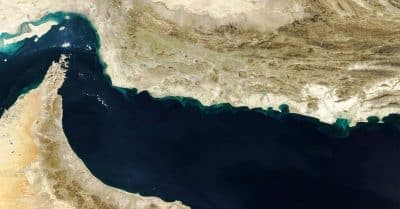
The global financial landscape is a complex web where geopolitical shifts can send immediate ripples across diverse asset classes, from traditional commodities to the burgeoning crypto market. Recently, a significant development in the Middle East – Oman's decision to waive transit fees for ships passing through the Strait of Hormuz, coupled with reports of a potential US-Iran ceasefire – has ignited intense discussions and swift market reactions. For astute investors and traders, understanding these intricate connections is paramount, especially when navigating the often-volatile world of digital assets.
Oman's Strategic Move: Strait of Hormuz and Geopolitical Tensions
The Strait of Hormuz, a narrow passage connecting the Persian Gulf with the Arabian Sea, is arguably the world's most critical oil chokepoint. Through it passes roughly one-fifth of global oil consumption daily, making any disruption or policy change in the region a matter of international concern. Oman, strategically positioned on the strait, plays a crucial role in its stability. The recent announcement of a fee waiver for vessels transiting the strait is not merely an economic decision; it's a powerful geopolitical signal.
This move comes amidst a backdrop of heightened tensions between the United States and Iran, a relationship that has historically fueled uncertainty in energy markets. Reports of a potential US-Iran ceasefire, even if tentative, further amplify the perceived de-escalation. Such developments can significantly alter the risk premium associated with the region, impacting everything from shipping costs to global oil prices. For the crypto market, which often reacts to macro-economic sentiment and perceived global stability, these shifts can trigger both speculative movements and genuine re-evaluations of risk.
Oil Market Volatility: A Direct Reaction
Unsurprisingly, the oil market was the first to react sharply to these geopolitical developments. A reduction in perceived risk in the Strait of Hormuz, combined with the prospect of eased US-Iran tensions, typically suggests a more stable supply outlook. This can lead to downward pressure on crude oil prices, as the 'war premium' or 'risk premium' embedded in prices begins to dissipate.
- Supply Certainty: Reduced transit fees and a potential ceasefire signal greater stability for oil shipments.
- Lower Operating Costs: For oil tankers, waived fees translate to lower operational expenses, potentially increasing supply availability.
- Market Sentiment: Positive geopolitical news can shift overall market sentiment from risk-averse to more optimistic, impacting commodity futures.
Broader Ripple Effects on Traditional Assets
The impact of such news extends far beyond just oil. Traditional financial markets are highly interconnected:
- Stock Markets: Often react positively to reduced geopolitical risk, especially sectors sensitive to energy costs or international trade.
- Bonds: Government bonds, typically seen as safe-haven assets, might see some outflows as investors seek higher returns in riskier assets.
- Gold: The ultimate safe-haven asset, gold, could experience selling pressure as global uncertainty recedes.
These traditional market movements inevitably influence investor behavior and capital flows, some of which invariably find their way into or out of the crypto ecosystem.
Crypto's Evolving Response to Global Uncertainty
The cryptocurrency market, particularly our blog often discusses Bitcoin, has increasingly shown a complex relationship with geopolitical events. While some proponents argue for Bitcoin's role as a digital safe haven, uncorrelated with traditional finance, its behavior in times of crisis is often nuanced.
When global tensions escalate, Bitcoin can sometimes act as a safe haven, attracting capital from investors seeking alternatives to fiat currencies or traditional assets. However, in other scenarios, particularly during broader market sell-offs driven by risk aversion, Bitcoin can behave like a high-beta tech stock, experiencing significant declines alongside equities. The Strait of Hormuz news, signaling de-escalation, presents a scenario where risk assets might rally, potentially pulling crypto along, or conversely, a flight from traditional safe havens might indirectly affect crypto's perceived value proposition.
Leveraging AI Signals in Turbulent Times
In an environment where geopolitical headlines can trigger rapid and unpredictable market shifts, access to timely and accurate information is critical. Platforms like NexCrypto leverage advanced AI and machine learning algorithms to analyze vast amounts of market data, including news, sentiment, and technical indicators. This allows them to generate high-probability trading signals, helping traders make informed decisions even when markets are reacting sharply to external events.
For traders looking to capitalize on market volatility or mitigate risks associated with sudden geopolitical shifts, an AI-powered signal platform can provide an edge. It can help identify emerging trends, pinpoint entry and exit points, and offer insights that human analysis alone might miss in the heat of the moment.
The Long-Term Resilience of Crypto Amidst Geopolitics
While immediate market reactions to geopolitical events can be dramatic, it's crucial to consider the long-term implications for the crypto space. The growing institutional adoption of cryptocurrencies, coupled with ongoing technological advancements in blockchain, suggests a path toward greater resilience and integration into the global financial system. Events like those in the Strait of Hormuz, while causing short-term fluctuations, also serve as stress tests, highlighting crypto's evolving role and potential as a distinct asset class.
As the world continues to grapple with geopolitical complexities, the narrative around crypto's utility—whether as a hedge against inflation, a safe haven, or a purely speculative asset—will continue to develop. Navigating this evolving landscape requires not just an understanding of market fundamentals but also a keen awareness of global macro trends and the tools to respond effectively.
The recent developments surrounding the Strait of Hormuz and US-Iran relations underscore the profound impact of geopolitics on global markets, including cryptocurrencies. For traders seeking to stay ahead and make data-driven decisions in these dynamic conditions, advanced tools are essential. Don't let market volatility catch you off guard. Sign up for NexCrypto today and empower your trading strategy with cutting-edge AI-powered signals.
Source: Crypto Briefing
Ready to Trade Smarter?
Join thousands of traders using AI-powered signals, real-time analytics, and on-chain intelligence to stay ahead of the market.
Start Free — No Credit Card Needed