Hawkish Fed Policy: Navigating Crypto's Future
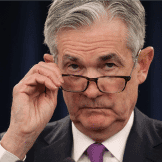
The financial world constantly shifts, and few entities wield as much influence over global markets as the U.S. Federal Reserve. When the whispers of a more hawkish Fed policy begin to circulate, investors across all asset classes, including the dynamic realm of cryptocurrency, sit up and take notice. A hawkish stance, characterized by a commitment to curbing inflation even at the risk of slower economic growth, has profound implications for interest rates, liquidity, and ultimately, the valuation of digital assets. Understanding this pivotal economic force is crucial for anyone looking to navigate the often-turbulent crypto waters.
Understanding Hawkish Monetary Policy Explained
At its core, a hawkish monetary policy signifies a central bank's priority: controlling inflation. This contrasts with a 'dovish' stance, which typically prioritizes economic growth and employment, often tolerating higher inflation. The Federal Reserve, armed with tools like interest rate adjustments, quantitative tightening (reducing its balance sheet), and forward guidance, uses these mechanisms to manage the economy. When the Fed adopts a hawkish posture, it signals a readiness to:
- Raise interest rates: Making borrowing more expensive, which can cool down an overheating economy.
- Reduce the money supply: Through measures like quantitative tightening, pulling liquidity out of the financial system.
- Communicate a firm stance: Influencing market expectations about future policy direction.
Historically, such shifts have sent ripples through equity markets, bond yields, and currency valuations. For crypto, an asset class still finding its footing in the broader financial landscape, these actions can introduce significant volatility and redefine investment strategies.
The Historical Context of Fed Actions
Looking back, periods of aggressive Fed tightening, such as the early 1980s under Paul Volcker, have been characterized by sharp economic adjustments. While the crypto market didn't exist then, traditional assets experienced significant re-pricing. More recently, post-2008 quantitative easing led to an abundance of liquidity, which indirectly fueled growth in various speculative assets, including early crypto adoption. The reversal of such policies inevitably creates a different economic environment, one where capital becomes scarcer and more expensive.
Inflation's Impact on Crypto Markets
Inflation, the persistent rise in prices for goods and services, erodes purchasing power. For a long time, Bitcoin was touted as a hedge against inflation, a digital gold that could retain value when fiat currencies faltered. However, the increasing correlation between crypto and traditional equities, particularly tech stocks, has shown that crypto is not entirely immune to broader macroeconomic pressures.
When inflation runs hot, and the Fed steps in with a hawkish response, several dynamics unfold:
- Rising interest rates: Higher rates make 'risk-free' assets like government bonds more attractive, potentially drawing capital away from riskier assets like cryptocurrencies.
- Stronger dollar: A hawkish Fed often leads to a stronger U.S. dollar, which can put downward pressure on assets priced in dollars, including crypto.
- Reduced liquidity: As the Fed withdraws liquidity, there's less capital available to flow into speculative investments.
These factors collectively create a more challenging environment for crypto, often leading to price corrections and increased volatility. Understanding these interconnections is vital for making informed trading decisions in a changing economic climate.
Why Crypto Responds to Macroeconomic Shifts
The days of crypto operating in a silo are largely over. Institutional adoption, the emergence of crypto derivatives, and the integration of digital assets into mainstream finance have all contributed to its increased sensitivity to macroeconomic indicators. Large institutional players manage portfolios that span both traditional and digital assets, meaning their capital allocation decisions are influenced by overarching economic conditions and central bank policies. Thus, a hawkish Fed's actions reverberate through the entire financial ecosystem, including crypto.
Crypto Market Under Hawkish Fed Scenarios
What specific scenarios might unfold for the crypto market under a hawkish Fed? While predicting the future is impossible, we can outline potential outcomes:
- Short-term Volatility and Price Correction: The initial reaction to hawkish signals or actual rate hikes often involves panic selling and increased market volatility as investors de-risk their portfolios.
- Flight to Quality: In uncertain times, some investors might shift towards more established cryptocurrencies like Bitcoin and Ethereum, perceiving them as relatively safer bets within the crypto space, while smaller altcoins could suffer more significant declines.
- Innovation vs. Valuation: While market valuations might face headwinds, the underlying innovation in blockchain technology and decentralized finance (DeFi) continues. Projects with strong fundamentals and clear utility may eventually weather the storm better than purely speculative ventures.
- Opportunity for Value Investors: For those with a long-term perspective, market downturns caused by hawkish policies can present opportunities to accumulate high-quality assets at lower prices.
Traders must remain agile and adapt their strategies to these evolving market conditions. The ability to identify trends, manage risk, and execute timely trades becomes paramount.
AI Trading Signals for Volatility
In an era defined by economic uncertainty and rapid market shifts, relying on traditional analysis alone can be insufficient. This is where NexCrypto's AI-powered trading signals become an invaluable asset. Our sophisticated algorithms analyze vast amounts of market data, economic indicators, and news sentiment in real-time to identify potential trading opportunities and risks.
During periods of heightened volatility driven by a hawkish Fed, AI can:
- Spot emerging trends: Identify subtle shifts in market sentiment or price action that human traders might miss.
- Provide timely alerts: Deliver actionable signals for both entry and exit points across various crypto and forex pairs.
- Aid in risk management: Help traders understand potential downside risks associated with certain positions, allowing for more informed decision-making.
- Adapt to changing conditions: Machine learning models continuously learn and adjust to new market dynamics, offering a dynamic edge.
Leveraging such advanced tools can help traders stay ahead of the curve, whether the market is experiencing a hawkish contraction or a dovish expansion. Staying informed and equipped with the right tools is the key to navigating any market cycle.
A hawkish Fed policy is a significant force that can reshape the crypto landscape, introducing both challenges and opportunities. While the prospect of higher interest rates and reduced liquidity might lead to short-term volatility, understanding these dynamics allows traders to position themselves strategically. By staying informed, adapting your strategies, and utilizing powerful tools like NexCrypto's AI-powered trading signals, you can navigate these complex market conditions with greater confidence. Don't let macroeconomic shifts catch you off guard; empower your trading decisions with precision and foresight. Sign up for NexCrypto today and gain an edge in any market environment.
Source: Crypto Briefing
Ready to Trade Smarter?
Join thousands of traders using AI-powered signals, real-time analytics, and on-chain intelligence to stay ahead of the market.
Start Free — No Credit Card Needed