Global Volatility Echoes: Decoding the KOSPI Plunge and its Crypto Implications
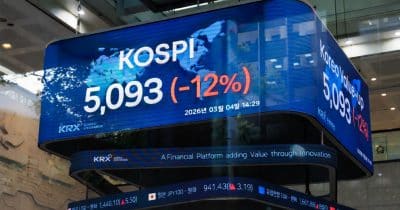
The KOSPI Shockwave: A Historic Market Downturn
South Korea's benchmark stock index, the KOSPI (Korea Composite Stock Price Index), recently experienced a dramatic single-day decline, plummeting by a staggering 12%. This historic crash, one of the most severe in its history, triggered circuit breakers designed to halt trading and prevent further panic. The sudden and sharp contraction underscored a growing unease pervading global financial markets, with investors reacting to a confluence of economic stressors and uncertainties.
The KOSPI, a key indicator of economic health in one of Asia's most technologically advanced nations, reflects the performance of major South Korean companies. Its precipitous fall wasn't an isolated incident but rather a stark symptom of broader systemic concerns. Such a significant downturn in a major economy invariably sends ripples across international borders, influencing investor sentiment and capital flows worldwide.
Understanding the Triggers Behind Market Instability
While specific catalysts for such a sharp decline can be multifaceted, common drivers of extreme market volatility often include:
- Global Economic Slowdown Fears: Widespread concerns about a looming recession or significant slowdown in major economies.
- Geopolitical Tensions: Conflicts or political instability that threaten international trade and investment.
- Inflationary Pressures and Interest Rate Hikes: Central banks' aggressive measures to combat inflation can stifle economic growth.
- Supply Chain Disruptions: Continued bottlenecks impacting manufacturing and global trade.
- Investor Panic: A 'flight to safety' mentality, where investors rapidly liquidate riskier assets in favor of perceived safe havens.
The Korean market's sensitivity to global trade and economic sentiment makes it a bellwether for wider trends. When an economy like South Korea's, deeply integrated into the global supply chain and export-oriented, experiences such a severe shock, it signals potential headwinds for the world economy.
Crypto's Response: Correlation or Diversification?
For participants in the crypto market, a major event like the KOSPI crash immediately raises questions about Bitcoin's (BTC) and other digital assets' roles during times of traditional market stress. Historically, the narrative around Bitcoin has often positioned it as a 'digital gold' or a hedge against inflation and economic instability.
However, in recent years, the correlation between crypto and traditional equity markets, particularly tech stocks, has shown periods of significant alignment. When global markets experience a sharp downturn, initial reactions often see Bitcoin and altcoins also declining as investors de-risk across all asset classes, including those perceived as speculative.
Key Considerations for Crypto Traders:
- Short-Term Correlation: In immediate panic sell-offs, crypto often follows traditional markets as liquidity is sought across the board.
- Long-Term Decoupling Potential: Some argue that over a longer horizon, especially if traditional financial systems face fundamental challenges, crypto's decentralized nature could allow it to decouple and act as a true alternative.
- Increased Volatility: Market crashes in traditional finance can inject higher volatility into crypto, creating both substantial risks and significant trading opportunities for those who can navigate it.
Navigating Volatility: Strategies for the Savvy Trader
Understanding the interplay between traditional market events and crypto performance is paramount for any serious trader. Here's how you can position yourself:
1. Stay Informed and Analyze Global Indicators
Keep a close watch on macroeconomic data, central bank policies, and major stock market movements. Events like the KOSPI crash are not isolated; they are part of a larger global narrative. Integrating traditional market analysis into your crypto trading strategy provides a crucial edge.
2. Implement Robust Risk Management
During periods of heightened volatility, strict risk management is non-negotiable. This includes setting clear stop-loss orders, diversifying your portfolio (within crypto and potentially across asset classes), and never over-leveraging. A sudden market shock can liquidate positions rapidly.
3. Identify Potential Safe Havens (Within Crypto)
While Bitcoin is often seen as the primary safe haven in crypto, its performance during extreme traditional market stress can vary. Consider stablecoins as temporary havens for capital preservation, or explore assets with strong fundamentals that might be oversold due to general market panic.
4. Look for Opportunities in the Downturn
Market crashes, though unsettling, often present generational buying opportunities. Strong projects with solid use cases and development teams that are significantly discounted due to broader market fear can offer substantial long-term returns. However, this requires careful fundamental analysis and a long-term perspective.
5. Leverage Trading Signals Wisely
In turbulent times, reliable trading signals become even more valuable. They can help identify potential entry and exit points, spot trend reversals, and provide insights into market sentiment that might be obscured by panic. Always combine signals with your own due diligence and risk assessment.
Conclusion: Embracing a Holistic Market View
The KOSPI's historic plunge serves as a potent reminder of the interconnectedness of global financial markets. For crypto traders, this isn't just news from a distant stock exchange; it's a critical piece of the puzzle that influences sentiment, liquidity, and ultimately, price action in the digital asset space. By adopting a holistic view that encompasses both traditional finance and crypto dynamics, traders can better anticipate market shifts, manage risks, and capitalize on the unique opportunities that emerge from periods of global volatility.
The future of finance is increasingly intertwined. Those who understand these complex relationships will be best equipped to thrive in the ever-evolving market landscape.
Ready to Trade Smarter?
Join thousands of traders using AI-powered signals, real-time analytics, and on-chain intelligence to stay ahead of the market.
Start Free — No Credit Card Needed