CFTC Prediction Market Rules Spark Senate Democrat Pushback
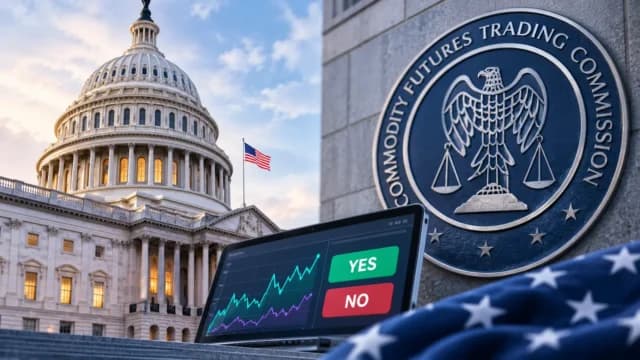
A regulatory clash is intensifying between federal oversight and state-level authority as nine Senate Democrats formally challenge the Commodity Futures Trading Commission's recent interpretation of prediction market regulations. The controversy centers on a November 5 directive that could fundamentally reshape how crypto-based prediction platforms operate across the United States.
The dispute highlights growing tensions in the rapidly evolving prediction market space, where platforms like Kalshi and Polymarket have emerged as major players. These exchanges allow users to trade contracts based on real-world events, from election outcomes to economic indicators, creating a multi-billion dollar industry that sits at the intersection of financial derivatives and what some jurisdictions classify as gambling.
Understanding the CFTC's Controversial Directive
The CFTC's November 5 interpretation fundamentally challenges how prediction market platforms have operated under state and local restrictions. The agency mandated that designated contract markets eliminate geographic restrictions within a strict 30-day deadline, arguing that federal derivatives law supersedes state-level regulations.
Under this directive, platforms registered as designated contract markets must provide nationwide access to their event contracts, regardless of local gambling laws or existing court orders. CFTC Chairman Mike Selig has defended this position, maintaining that federally regulated prediction markets should function under a unified national framework rather than a patchwork of state regulations.
The practical implications are significant. Platforms could be forced to offer contracts in jurisdictions where courts have explicitly ordered them blocked, potentially placing operators in an impossible position between federal compliance and judicial mandates.
Senate Democrats Mount Coordinated Opposition
Senator Adam Schiff of California spearheaded the legislative response, joined by eight Democratic colleagues including prominent figures like Amy Klobuchar and Maria Cantwell. Their November 16 letter represents a direct challenge to the CFTC's regulatory authority and interpretation of federal law.
The senators raised several critical concerns in their correspondence. First, they argued the directive conflicts with active judicial decisions in Michigan, Nevada, Washington, and tribal lands in California. Courts in these jurisdictions have specifically ordered platforms to maintain geographic restrictions and cease offering certain prediction contracts.
Legal Precedent and State Authority
The lawmakers bolstered their argument by citing appellate court decisions from the Sixth and Ninth Circuits. These rulings have supported states' rights to apply gambling regulations to prediction market activities, contradicting the CFTC's assertion of exclusive federal jurisdiction.
Beyond court orders, the senators emphasized that the directive undermines state and tribal sovereignty over gambling regulation. They warned that the CFTC's position could encourage companies to violate binding judicial decisions, creating a constitutional crisis over regulatory authority.
Expanding State-Level Legal Challenges
The regulatory dispute extends far beyond the nine senators' letter. Louisiana recently escalated enforcement actions against prediction market operators, with state officials successfully obtaining court authorization to pursue restrictions on event contracts.
Louisiana's Gaming Control Board has consistently maintained that sports-related contracts and other event markets constitute illegal gambling under state law. A temporary restraining order targeted major industry players including Kalshi, Polymarket, Robinhood, Coinbase, Gemini, and Crypto.com, demonstrating the breadth of state regulatory concern.
Federal Response and Multi-State Conflict
The CFTC has responded aggressively to state challenges, filing its own legal actions to block state-level restrictions. Some platforms have sought to join the federal regulator's cases, aligning their business interests with the agency's interpretation of federal law.
The regulatory landscape has become increasingly complex, with the CFTC now engaged in legal disputes with approximately a dozen states. This widespread disagreement signals that the prediction market regulatory framework remains fundamentally unsettled, with no clear resolution in sight.
Implications for Crypto Trading Platforms
The controversy carries significant implications for the broader cryptocurrency and digital asset ecosystem. Prediction markets have become increasingly integrated with crypto platforms, with many operating on blockchain infrastructure and accepting cryptocurrency deposits.
For traders and investors following these developments through platforms like NexCrypto, the regulatory uncertainty creates both risks and opportunities. Market volatility around prediction platform tokens and related assets may increase as legal battles progress.
The dispute also reflects broader questions about federal versus state authority in regulating emerging financial technologies. How these jurisdictional conflicts are resolved will likely influence regulatory approaches to decentralized finance, crypto exchanges, and other blockchain-based financial services.
Looking Ahead: Supreme Court and Regulatory Clarity
Many legal experts believe the Supreme Court may ultimately need to resolve this regulatory conflict. The fundamental questions about federal preemption, state gambling authority, and derivatives regulation may be too significant for lower courts to settle definitively.
Until such clarity emerges, prediction market platforms face operational uncertainty. The 30-day compliance deadline has created immediate pressure, forcing companies to choose between federal directives and state court orders—a legally precarious position regardless of which path they select.
The outcome of this regulatory battle will shape the future of prediction markets and potentially influence broader cryptocurrency regulation. As these legal challenges unfold, staying informed about regulatory developments becomes crucial for anyone involved in crypto trading. Keep track of these important market-moving events and get actionable trading signals through our blog and NexCrypto's AI-powered analysis tools.
Source: Bitcoinist
Ready to Trade Smarter?
Join thousands of traders using AI-powered signals, real-time analytics, and on-chain intelligence to stay ahead of the market.
Start Free — No Credit Card Needed